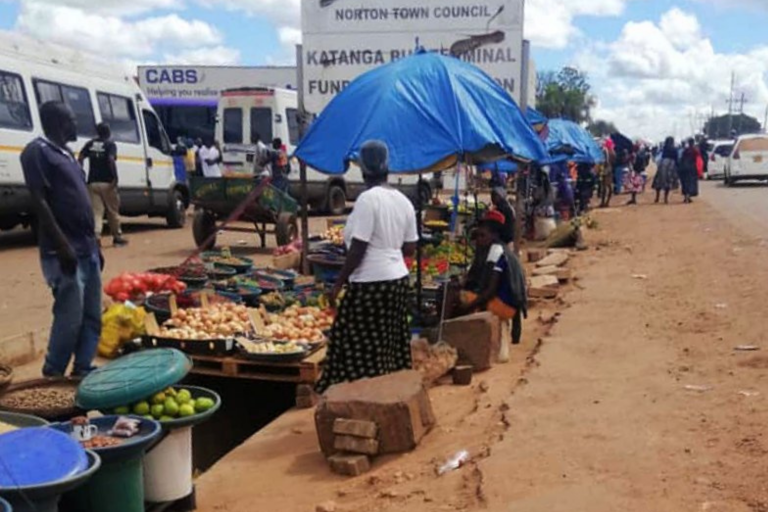

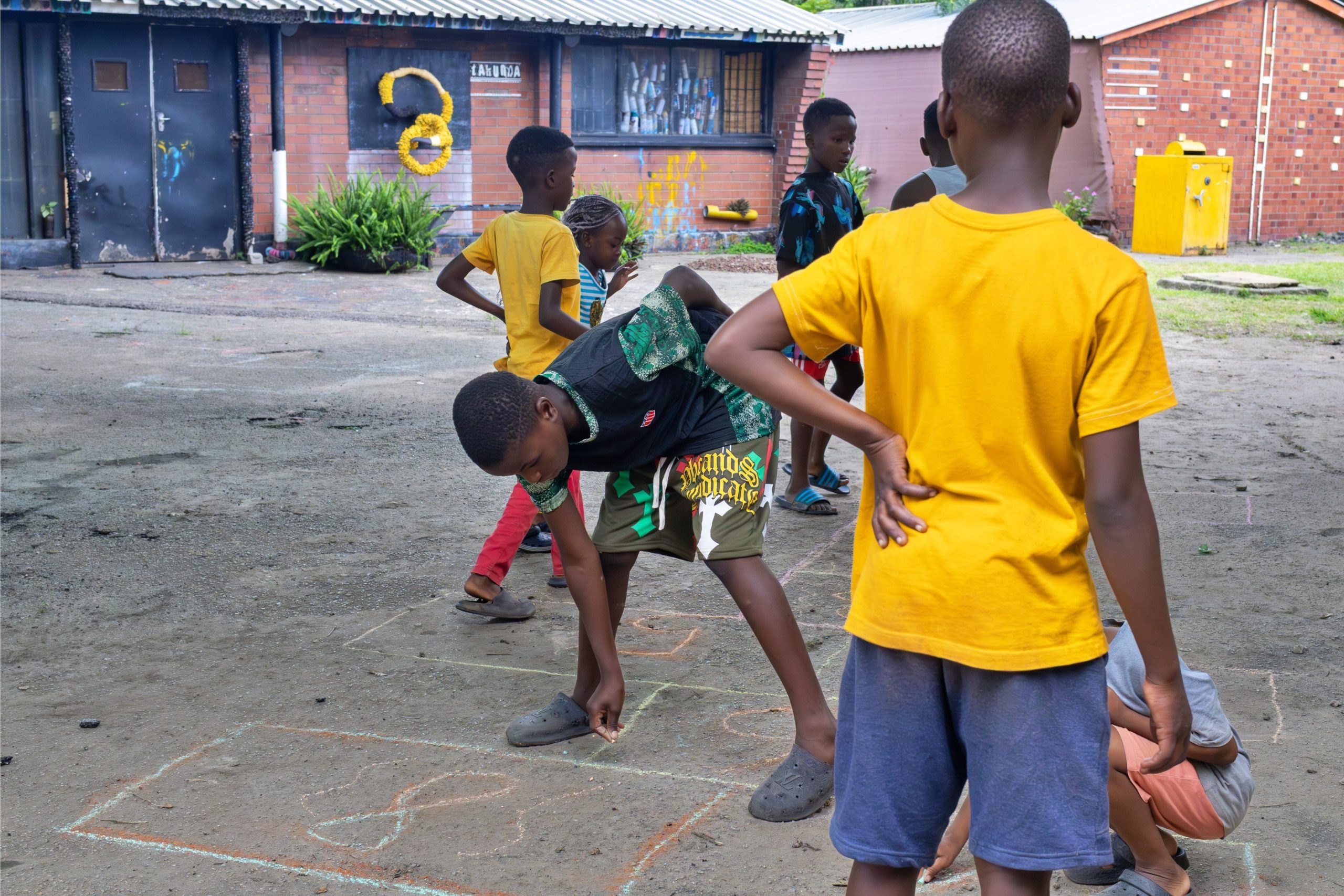
The sound of bare feet slapping dusty ground at 5 pm used to be the heartbeat of the township. In Highfield, that sound is fading.
Pada, kodo, nhodo, and street football, games that raised generations, are being replaced by a quieter noise: thumbs scrolling, WhatsApp notifications, and TikTok ringtones. The ghettos are slowly turning into uptowns, not because of tarred roads, but because of data bundles. Digital socialisation has arrived, and it’s rewriting how township kids play, connect, and grow up.
Years ago, before the era of mobile phones, “socialising” meant meeting at the soccer goalposts made from bricks. If you didn’t show up, your friends would find you. The screams and the whims of young children could be heard as far as one street to another street. The shouts of older people calling,” Muchapwanya ma window (You will break those windows),” have been replaced with auto-sent messages, ” Are you there?” sent on WhatsApp by a caregiver.
In an interview with Crooked Lanes Media, many residents have called on the growing disappearance of these social games as the main reason why many township children are not united.
Stephen Sibanda, a 35-year-old resident living in Lusaka, a section of the large Highfield area, said the social games united them in their youth days.
” When we were growing up, these social games made us one. During holidays, we would play ‘chikweshe’ street football in the morning till evening.”
“Those were the days, we networked unknowingly. Our dreams were crafted from those days. You would be called names of footballers, and you realise, I have a talent in the game. These games moulded us. Now, this generation, I don’t know… ” Sibanda added.
Another resident, Thomas Machieni, a Highfield resident, said that these social games are still there, but they are being slowly forgotten and developed, but at a dangerous pace.
” I still remember those days, when we would share one novel in the area. We would even use the library, but these days, not even one person goes there. I would “play” with books at the library and meet a few friends there. Not just mutual friends on Facebook, but real connections and interactions that have made me who I am today. ” We would sit and play for hours and discuss and dream. While we were growing up, reggae culture was also growing; we would sit and listen, ” he said.
Rudo Moyo, a resident, said: “mahumbwe ” [make-believe play] unknowingly informed her role as a woman, but she only realised it years later when she was looking at the younger generation’s way of handling situations.
” These games created us, the ghetto children. I still remember the mahumbwe as our weekend games. We would play games, taking on the role of a make-believe little family. This helped me later in life.” It is such a pain to see what has slowly replaced our games, ” she said
This change didn’t happen overnight. Cheaper smartphones, $1 data bundles, and community WiFi hotspots put the internet in every pocket. For a kid in the township, the phone is now the playground, the TV, and the social club.
A community member who preferred to remain anonymous believes the answer is not in choosing sides.
“Street football was nice, but I no longer have time for it. I am busy running my side hustles. Instead, my boys and I play FIFA Mobile as a squad every night, we’re in the same yard, but also playing with guys from SA and the UK. We learn more in this space than we ever did kicking a ball with no goalposts. The ghetto isn’t dying, it’s just online now. Data is the new jersey, “ anonymous said
Tinotenda Ncube from Highfield says she feels the silence more than anyone. She admits that while her brothers have phones, the yard has lost its noise, and she worries that kids no longer learn how to settle things face-to-face.
“I don’t know… It’s quiet now. After school, my little brothers just sit on their phones. No one shouts ‘kodo!’ anymore. We used to fight over teams, cry when someone cheated, then laugh 5 minutes later. Now, if someone annoys you online, you just block them. You don’t learn to talk it out. I have data sometimes, but when I don’t, I’m just… alone. The yard feels empty even when it’s full of people. I miss the dust on my knees, ” Ncube said.