

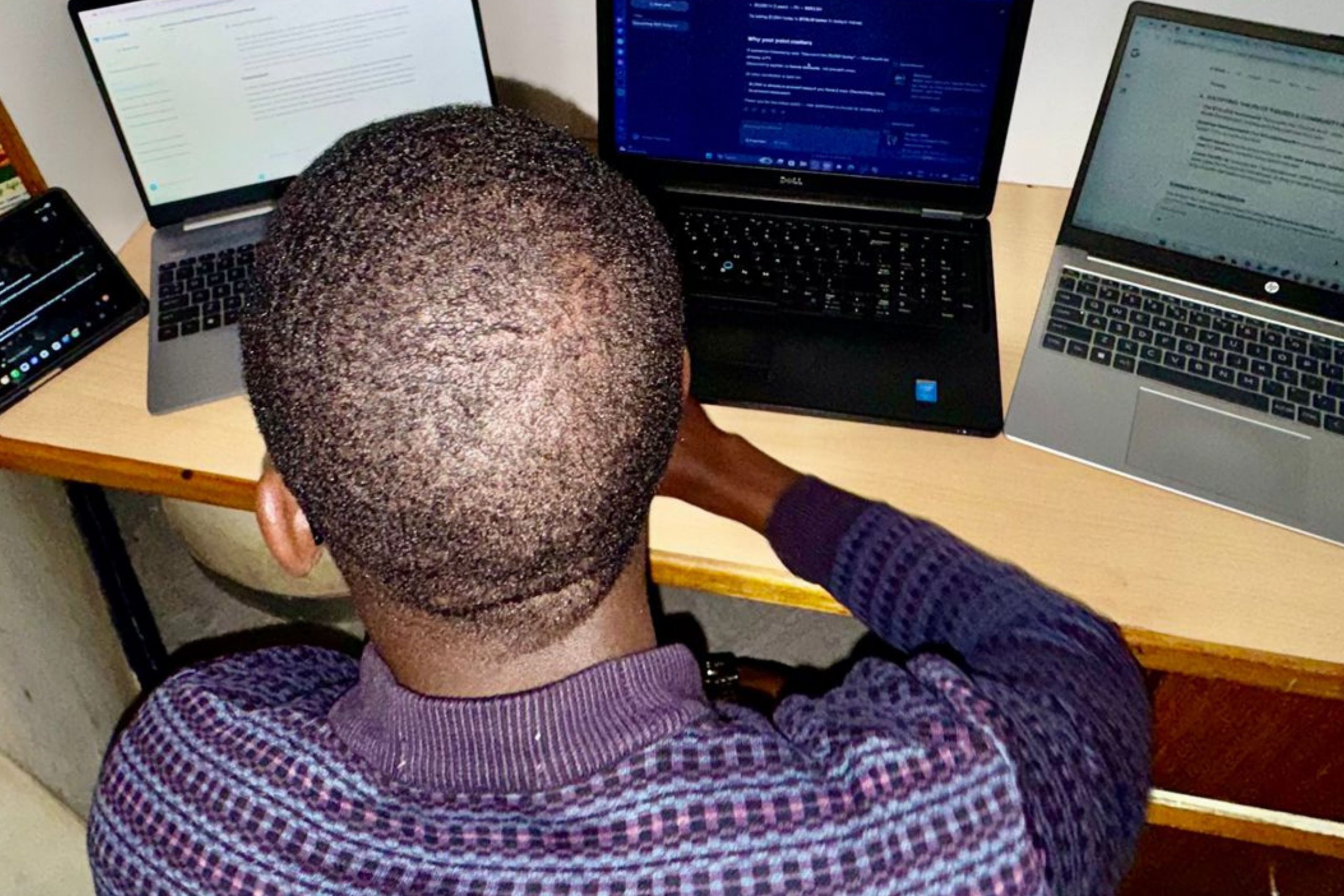
In Chitungwiza, young people are finding innovative ways to improve their lives through artificial intelligence (AI). With just a smartphone and internet access, some youths are earning an income, completing schoolwork, and launching small businesses using AI-powered applications.
Nineteen-year-old Onismore Chimhuka said he uses AI tools to design posters for churches and small businesses.
“I started small, but now people pay me to make posters,” he said. “AI makes my work easier and faster.”
Among the AI tools being used are Canva AI for poster design, ChatGPT for research, TurboScribe for speech-to-text transcription, Grammarly for grammar correction, among others. At local schools, students are also turning to AI to support their studies. Lenah Karidza, a 20-year-old student, said AI helps her better understand difficult subjects.
“It helps me with assignments and studying,” she said. “But I make sure I understand the work.”
As AI continues to transform industries and daily life across the globe, more young Zimbabweans are beginning to explore its potential.
Zimbabwean businessman and philanthropist Strive Masiyiwa has encouraged young people to embrace AI, predicting that the next generation of African billionaires will consist of young innovators developing AI solutions for sectors such as agriculture and healthcare.
Tashinga, 22, has turned AI into a source of income by assisting job seekers with CV writing.
“I use AI to help create good CVs, then I edit them,” he said. “It’s helping me earn something.”
Although there is still a significant gap in knowledge and digital access, Zimbabwe is increasingly positioning itself within the growing AI landscape, particularly in music production. AI is beginning to influence various genres, including gospel music. One example is “Ndakainamatira Nyaya Iyoyi,” a trending AI-generated gospel song whose music video has amassed more than four million views.
Kudakwashe, a music producer from Chitungwiza, said AI has also opened doors for aspiring musicians without access to expensive studio equipment.
“I don’t have a studio, but I can still create music using AI,” he said.
Community leader Mrs Nyoni said the determination being shown by young people in Chitungwiza is encouraging. However, she warned that AI must be used responsibly, particularly in academic settings.
Reports from the Zimbabwe National Statistics Agency and the Ministry of ICT, Postal and Courier Services Zimbabwe show that many young Zimbabweans continue to face unemployment challenges. It is encouraging that emerging technologies such as AI are helping some young people carve out alternative economic opportunities.
Despite the positive impact AI is having on youth livelihoods, major challenges remain. Many young people still lack reliable internet access, while most AI tools require consistent connectivity to function effectively.
The Government of Zimbabwe, through the Ministry of ICT, recently announced plans to establish public internet hotspots across the country, a move widely seen as an effort to ensure broader access to evolving digital technologies and opportunities.